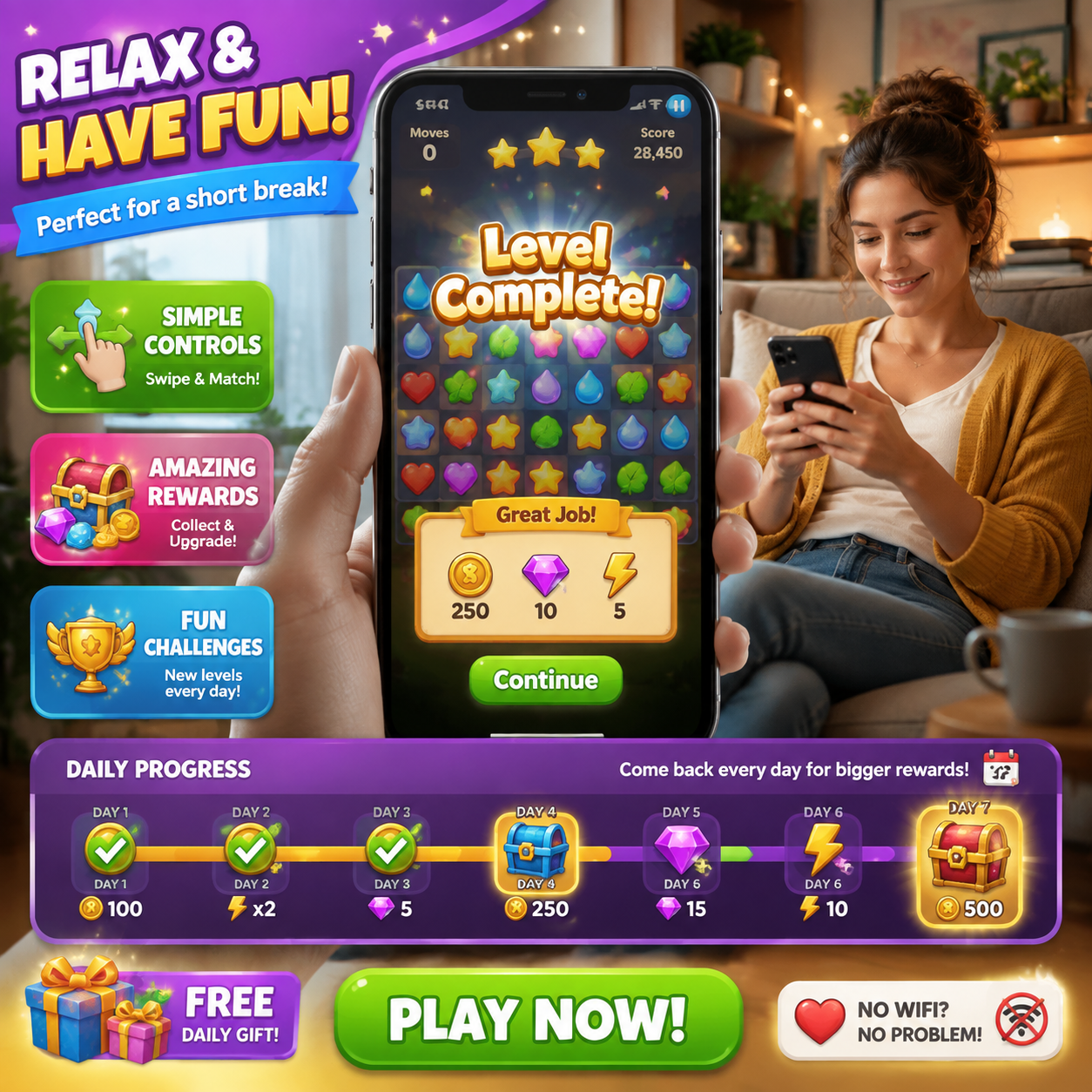

Monetization Strategies in Free-to-Play Casual Gaming
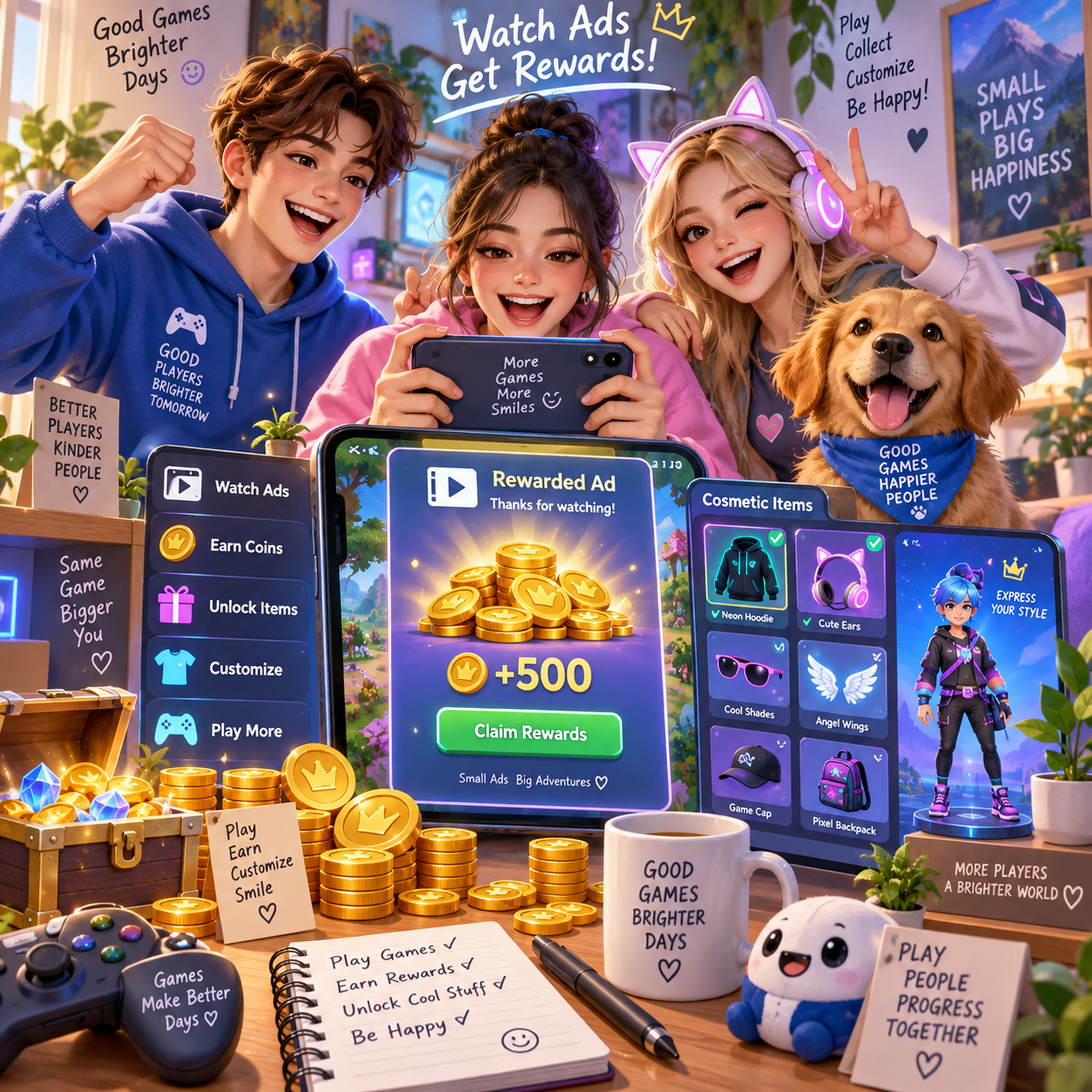
Free-to-play casual games remove the price barrier, making it easy for players to download, try, and share a game. The challenge begins after acquisition: developers must generate revenue while preserving the short, accessible sessions that make casual games appealing.
Effective monetization treats revenue as part of the player experience. Advertising, in-app purchases, subscriptions, and hybrid models can all work, but the right choice depends on the gameplay loop, audience, session length, and progression design.
Why Monetization Matters in Casual Games
Monetization matters because free access attracts players, while revenue funds development, content updates, customer support, and live operations. A sustainable business model allows a casual game to improve without placing the full cost on every player.
Free-to-play, or F2P, games benefit from a large potential audience. Players can experience the core game before deciding whether to watch an ad, buy an optional item, or subscribe. That low-friction entry can support organic growth and give product teams more opportunities to learn from player behavior.
Revenue alone is not a sufficient goal. A monetization feature that increases short-term earnings but causes players to leave may reduce lifetime value (LTV). For example, an aggressive interstitial ad can produce immediate advertising revenue, yet repeated interruptions may lower session frequency and increase churn.
A useful decision rule is to evaluate every offer through three questions:
- Does it provide clear value to the player?
- Does it preserve the core gameplay loop?
- Can it increase long-term engagement as well as immediate revenue?
When the answers are consistently positive, monetization becomes a support system for the game rather than a barrier placed inside it.
Choosing the Right Free-to-Play Monetization Model
The right free-to-play monetization model depends on player behavior, gameplay length, and the value players receive from optional features. Advertising suits broad audiences and frequent sessions, while purchases and subscriptions work better when the game offers meaningful progression or ongoing benefits.
Advertising is often effective in simple puzzle, arcade, word, and simulation games. It monetizes players who do not want to spend money, but revenue depends on traffic, ad engagement, and careful placement. Ads are usually strongest when they appear at natural pauses rather than during active play.
In-app purchases fit games with progression systems, repeatable goals, virtual currency, boosters, extra lives, or collectible content. They can generate more value from a smaller group of paying players, but pricing must remain transparent and purchases should feel optional.
Subscriptions work when players return frequently and can understand the recurring benefit. A subscription might remove ads, provide a daily currency allowance, unlock exclusive cosmetic items, or offer a regular content track. It is a weaker fit for a game that players open only occasionally.
A hybrid monetization model combines two or more methods. For example, non-paying players may see rewarded video ads, while paying players can purchase an ad-free option and cosmetic items. Hybrid models diversify revenue, but too many offers can create confusion.
- Short sessions and broad reach: prioritize rewarded video ads and limited interstitials.
- Deep progression: consider in-app purchases for boosters, currency, and content.
- Frequent daily play: test subscriptions, memberships, or recurring benefit bundles.
- Collection and self-expression: emphasize cosmetic items and personalization.
Choose the model that matches what players already value. Do not force a complex economy into a game whose appeal comes from simplicity.
Using Rewarded and Interstitial Ads Effectively
Rewarded video ads work best when players actively choose them, while interstitial ads should appear only at clear breaks in the game. Both formats can support revenue, but they create different experiences and should not be treated as interchangeable.
Rewarded video ads offer a direct exchange: the player watches an advertisement and receives a benefit. Suitable rewards include an extra life, a small amount of virtual currency, a booster, a retry, or access to a bonus round. The reward should be useful without making the game feel impossible to play without it.
Place the invitation after a meaningful decision point. A player who has just lost a level may accept an extra attempt; a player in the middle of a fast action sequence is more likely to feel interrupted. Always show the reward before the player opts in.
Interstitial ads require stricter controls. Use them between levels, after a completed challenge, or when a session naturally ends. Avoid showing an interstitial immediately after another ad, during onboarding, or just before a player reaches a goal.
Track ad frequency by session and by player segment. New players may need uninterrupted time to understand the game, while returning players may accept a predictable ad rhythm. A frequency cap can protect the experience, although the correct limit must be tested against retention and revenue.
Designing Appealing In-App Purchases
Effective in-app purchases offer clear, understandable value without making non-paying players feel blocked or defeated. Virtual currency, boosters, extra lives, progression benefits, and cosmetic items can all work when the economy remains transparent and fair.
Virtual currency gives players flexibility, but it also creates distance between real money and the item being purchased. Display the final price clearly, explain exchange rates, and avoid unnecessarily complicated bundles. Players should know what they are buying before confirming payment.
Boosters and extra lives are useful in level-based casual games. They can help players recover from a difficult challenge or experiment with a new strategy. The trade-off is delicate: if levels appear designed to create frustration, purchases may be viewed as pressure rather than assistance.
Progression benefits should accelerate play without eliminating it. For instance, a purchase might reduce waiting time or provide several attempts, while the core challenge remains available to everyone. This approach protects perceived fairness and reduces pay-to-win concerns.
Cosmetic items are especially suitable for games with avatars, homes, collections, or social sharing. Skins, themes, animations, and decorative objects can encourage purchases through self-expression rather than competitive advantage.
- Show the benefit in context, such as previewing a skin on the player’s avatar.
- Offer small, medium, and larger purchase options without hiding the basic price.
- Use bundles sparingly and explain what each bundle contains.
- Keep earned rewards available so free players can still make visible progress.
The strongest purchase design follows the player’s motivation: convenience for some, customization for others, and progress for those who want to move faster.
Building Retention Through Player-Friendly Offers
Player-friendly offers improve retention when they reinforce enjoyable play, timely goals, and a sense of control. Onboarding, events, personalization, limited-time offers, and subscription benefits should give players reasons to return rather than reasons to spend immediately.
Start with onboarding. Teach the core loop before presenting a purchase prompt. Players need to understand why a booster, cosmetic item, or subscription might matter. A clear first session usually creates more durable engagement than an early sales screen.
Live events can connect monetization with participation. A seasonal challenge might provide free rewards for everyone while offering optional cosmetic bundles or a premium reward track. The event remains meaningful even for players who spend nothing.
Personalization can improve relevance, but it should rely on observed preferences rather than pressure. A player who repeatedly uses a particular character may appreciate related cosmetic items. Another player may respond better to a small booster bundle. Avoid presenting the same offer to everyone at the same moment.
Limited-time offers create urgency, yet excessive countdowns can damage trust. Use genuine content windows, display the end time accurately, and avoid making players feel that a basic feature is disappearing. Subscription benefits should be similarly concrete: ad removal, daily rewards, exclusive cosmetics, or consistent monthly content.
A useful framework is value before urgency. First establish why the offer is useful; only then consider whether a time limit adds clarity. Urgency cannot rescue an offer that players do not understand.
Measuring and Optimizing Monetization Performance
Monetization performance should be measured alongside retention, churn, and player satisfaction. Revenue metrics show what players spend or generate, while behavioral metrics explain whether monetization supports a healthy game.
Track the following measures by platform, country, acquisition source, and player cohort where appropriate:
- Conversion rate: the percentage of players who complete an in-app purchase or subscription.
- Average revenue per user: revenue generated per user over a defined period.
- Ad engagement: impressions, opt-in rate for rewarded video ads, completion rate, and reward claims.
- Retention: the percentage of players who return after a defined period, such as the next day or later in the week.
- Churn: the rate at which players stop returning or become inactive.
- Lifetime value (LTV): the estimated total revenue a player generates during the relationship with the game.
Use controlled tests rather than changing everything at once. Compare two reward amounts, ad placements, price points, or subscription benefits while holding the rest of the experience stable. Watch both immediate revenue and later retention. A winning test increases value without shifting problems into another metric.
Review results in cohorts. An offer can perform well with experienced players and poorly with newcomers. Segmenting by progression stage, session frequency, and spending history helps teams avoid broad conclusions from a narrow group.
Common Monetization Mistakes to Avoid
The most damaging monetization mistakes interrupt play, hide value, or make progress feel artificially restricted. Fixing these problems often improves trust before any new offer is introduced.
Showing excessive ads
Developers may increase ad frequency because each impression appears to create revenue. The consequence can be shorter sessions, lower retention, and weaker LTV. Use natural pauses, frequency caps, and opt-in rewarded video ads instead.
Making progression pay-to-win
Teams sometimes sell powerful advantages to increase purchase conversion. In competitive or leaderboard-driven casual games, this can undermine fairness and discourage non-paying players. Favor convenience, customization, and modest progression support.
Using unclear pricing
Complicated virtual currency bundles can make an offer seem cheaper than it is. Players may hesitate or feel misled after purchase. Display local prices, explain the contents, and make the confirmation screen easy to understand.
Interrupting the core game loop
A purchase prompt after every level may capture attention, but it also teaches players to dismiss every offer. Trigger offers at relevant moments, such as when a player has shown interest in a feature or voluntarily opens the store.
When a monetization change reduces satisfaction, remove or revise it quickly. Protecting player trust is a practical investment in retention, future purchases, and long-term LTV.
Frequently Asked Questions
What is the best monetization model for a free-to-play casual game?
The best model matches the game’s loop and audience. Frequent short sessions often suit rewarded video ads, while progression-heavy games may benefit from in-app purchases. A carefully designed hybrid model can serve both paying and non-paying players.
Are rewarded ads better than interstitial ads?
Rewarded video ads are generally more player-controlled because users choose whether to watch them. Interstitial ads can still work at natural breaks, but excessive frequency is more likely to disrupt short casual sessions.
How can casual games encourage in-app purchases without frustrating players?
Show clear value, keep prices understandable, preserve a viable free path, and offer purchases at relevant moments. Cosmetic items and convenience features often create less frustration than mandatory progression payments.
What metrics should developers track for F2P monetization?
Track conversion rate, average revenue per user, ad engagement, retention, churn, purchase frequency, and lifetime value. Review them together because revenue growth without retention may indicate an unhealthy experience.
How can monetization support player retention?
Monetization can support retention through useful rewards, fair events, meaningful cosmetic collections, ad removal, and subscription benefits. The key is to make spending optional and connect every offer to a benefit players already understand.