

The Rise of Hyper-Casual Games: Trends and Analysis
Hyper-casual games have made a familiar promise to mobile players: open the app, understand the goal almost immediately, and start playing. Their quick rounds and simple controls helped them stand out in casual gaming, while giving developers a format suited to phone-sized moments of free time.
The genre has also changed. Competition for attention, user acquisition costs, and pressure to keep players engaged have pushed many games beyond a single simple loop. Understanding that shift helps explain both the appeal of hyper-casual games and the challenges facing them.
What Makes a Game Hyper-Casual?
A hyper-casual game is a mobile game built around simple mechanics, accessible controls, and short play sessions. Players can usually grasp the main objective within seconds, even if mastering it takes longer.
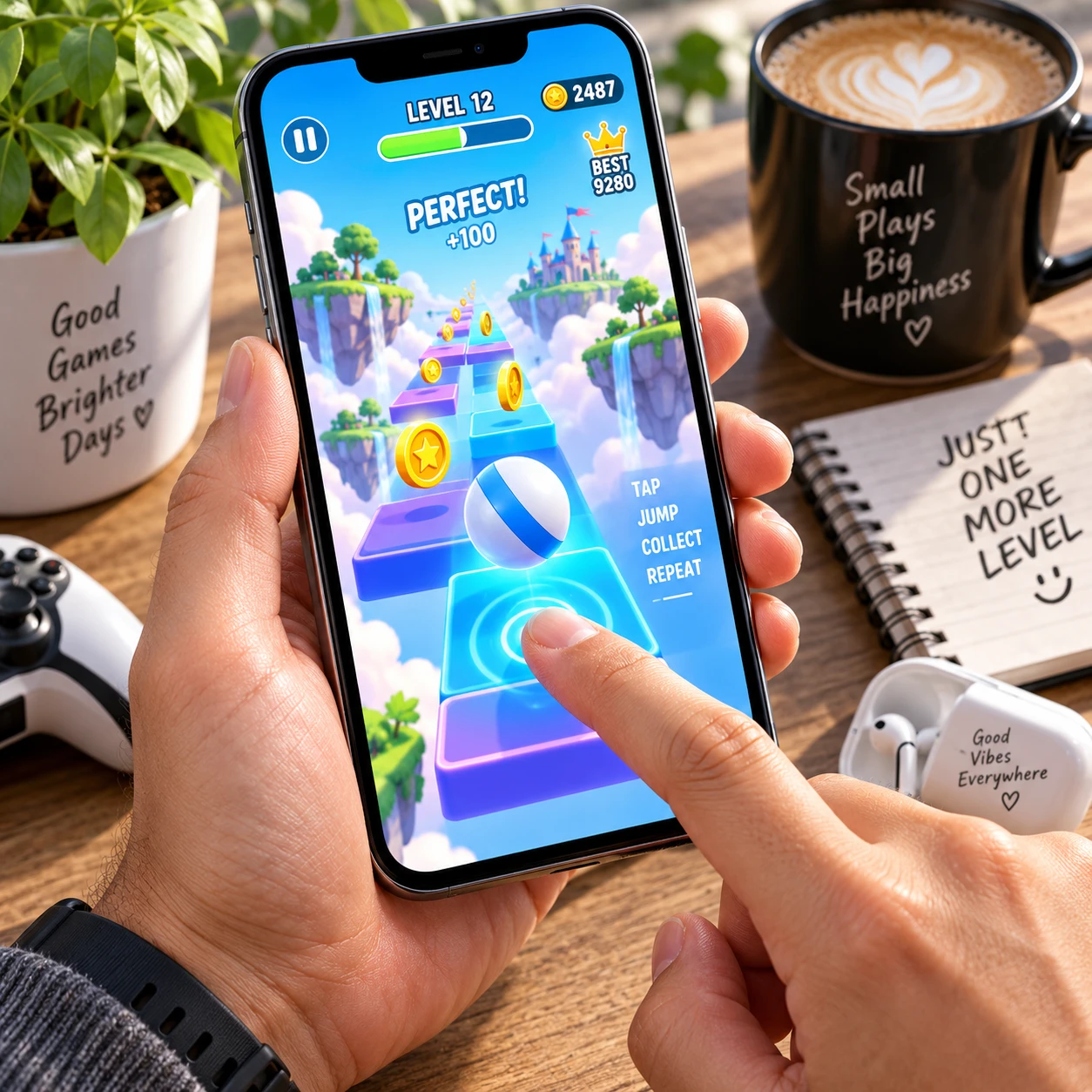
A game might ask you to tap to jump, swipe to steer, stack objects, or guide a ball through obstacles. These familiar actions keep the barrier to entry low: there is often no long tutorial, complicated menu, or detailed backstory to learn before playing. A failed attempt usually leads straight to another try.
That simplicity is a design choice, not a measure of how much effort a game requires. A strong core loop needs clear feedback and a goal that makes sense at a glance. The challenge is to make the action satisfying enough to repeat without adding so many rules that the game loses its immediacy.
Casual games are a broader category. They can include puzzles, simulation games, and social experiences with longer sessions, deeper systems, or persistent goals. Hyper-casual games typically prioritize instant understanding and quick restarts, though the boundaries between these categories are not always exact.
How Hyper-Casual Games Gained Popularity
Hyper-casual games gained popularity because they fit naturally into mobile gaming: they are easy to try, easy to understand, and convenient to play in brief gaps. A player can finish a round while waiting in line or resume after a short interruption.
Smartphones made games available throughout the day, but availability alone does not explain the genre’s appeal. Many people want entertainment without a long commitment or a learning curve. Simple controls and clear objectives let a game communicate its premise quickly, often through play itself.
Short sessions also make the format flexible. A player might complete one attempt and put the phone away, or keep going to beat a score or improve a run. That flexibility helped hyper-casual games reach people who do not think of themselves as regular gamers, as well as established mobile players looking for something lightweight.
However, ease of entry creates a crowded field. A player can switch to another game just as quickly as they downloaded the first. Developers therefore need a compelling first experience, while publishers have often relied on advertising and user acquisition campaigns to introduce games to potential players. Downloads can signal initial interest, but they do not guarantee lasting engagement or commercial success.
Key Trends in Hyper-Casual Game Design
Hyper-casual game design increasingly combines familiar actions with fast feedback, replayable challenges, and light progression. The goal is to preserve instant play while giving players a reason to return.
Many games begin with a mechanic players already recognize: tapping to dodge, swiping to change lanes, or matching objects. Familiarity reduces explanation time. The design then adds a small twist, such as changing obstacle patterns or a risk-reward choice, to make each attempt feel active rather than automatic.
Quick feedback is central. A score, animation, sound, or visible change tells players whether an action worked. When the result is clear, they can adjust and try again. Short rounds support this loop, but replayability depends on more than speed; players need some variation, a skill to improve, or a goal worth pursuing.
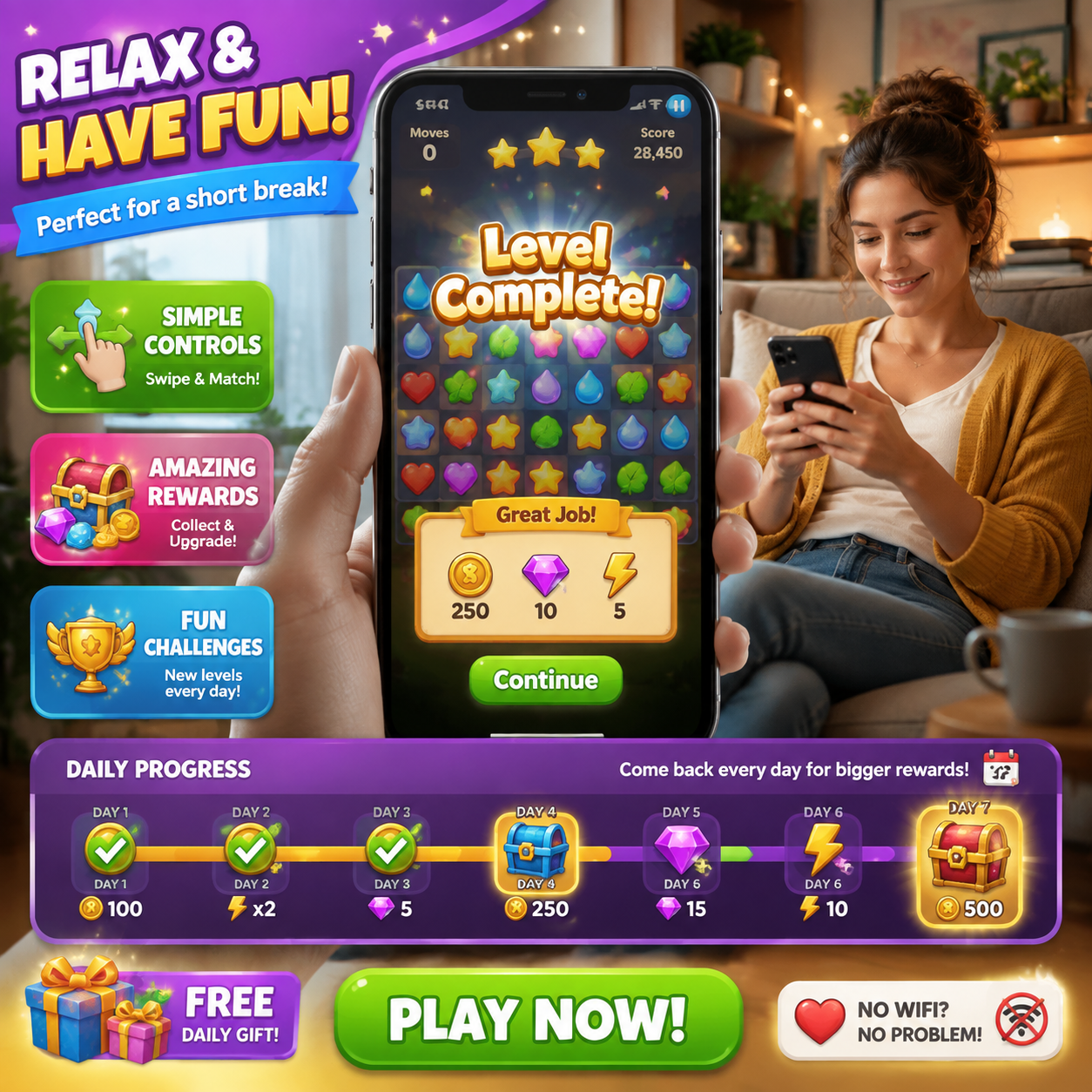
Another trend is adding modest layers of progression. Unlockable characters, cosmetic rewards, new environments, daily challenges, or a simple upgrade system can give repeat players more to work toward. These additions can help player retention, but they also risk cluttering a game that originally succeeded because it was easy to understand. Good design keeps extra systems optional or introduces them gradually.
Monetization and Player Retention
Hyper-casual games commonly earn revenue through in-game advertising, including rewarded video ads and interstitials. The challenge is to generate income without interrupting play so often that players leave.
Rewarded video ads give players a choice: watch an advertisement in exchange for an extra life, a bonus, or another attempt. Because the player opts in for a stated benefit, this format can feel more integrated than an unexpected interruption. Interstitial ads, shown between rounds or at other breaks, can also generate revenue, but their timing and frequency matter.
There is no universal ad frequency that suits every game. An ad after every failed attempt may disrupt a quick replay loop; fewer ads may preserve the experience but reduce opportunities to earn from each session. Developers have to consider session length, player expectations, and the effect of an ad on the next action.
Retention presents a related trade-off. The same simplicity that makes a game easy to try can make it easy to abandon. Clear goals, fair difficulty, new challenges, and meaningful rewards can encourage return visits. Yet adding too many prompts or progression systems can make the game feel demanding. Revenue and retention depend on the experience working together, not on ads or rewards alone.
Hyper-Casual vs. Hybrid-Casual Games
The main difference is depth: hyper-casual games focus on an immediately understandable loop, while hybrid-casual games combine that simplicity with more persistent progression or additional systems.
A hyper-casual game might center on one action repeated across short rounds. A hybrid-casual game could keep that same accessible action but add levels, upgrades, collection goals, a map, or a longer-term challenge. Those systems give players reasons to return and can create more ways to engage with the game over time.
The distinction is a useful guide, not a strict rulebook. Games exist along a spectrum, and a familiar hyper-casual mechanic can sit inside a more substantial casual game. The design question is whether added features deepen the experience or simply add friction.
Hybrid-casual design may support longer engagement, but it brings extra work. Progression must be balanced, new content needs to remain worthwhile, and menus or systems should not obscure the core game. For players, the change can mean more goals and variety; for developers, it means a more complex product to maintain.
Challenges and What Comes Next
Hyper-casual games face three persistent challenges: getting discovered, keeping players engaged, and finding a sustainable balance between advertising and enjoyable play. These pressures are encouraging the genre to evolve rather than disappear.
App stores offer an enormous choice of mobile games, so a clear concept does not guarantee visibility. User acquisition can help a game reach potential players, but paid promotion involves cost and uncertainty. If a campaign attracts downloads without meaningful play or return visits, it may not be a sound investment.
Retention is difficult for the same reason the format is accessible: players can try a game quickly and move on quickly. A distinctive visual style, satisfying controls, fair challenge, and thoughtful updates can help, but no single feature ensures loyalty. Developers also need to understand where players stop playing and whether the game’s pacing, difficulty, or ad placement contributes.
The likely direction is a continued blend of immediate mechanics and deeper casual-game features. Some games will remain deliberately minimal; others will add progression, social elements, or fresh content. Each choice has a cost in complexity and development effort. For players, that means the label “hyper-casual” may describe a game’s starting point more often than its full experience.
Frequently Asked Questions
What defines a hyper-casual game?
A hyper-casual game typically has simple mechanics, easy-to-learn controls, and short play sessions. Its main objective is clear quickly, and players can often restart a round with little delay.
How do hyper-casual games make money?
Many use in-game advertising, such as rewarded videos and interstitial ads. Some also offer optional purchases. The right approach depends on the game, and excessive interruptions can damage the player experience.
What is the difference between hyper-casual and hybrid-casual games?
Hyper-casual games emphasize a simple, repeatable core loop. Hybrid-casual games retain accessible gameplay but add deeper progression, such as upgrades, collections, or longer-term goals.
Are hyper-casual games still popular?
Hyper-casual games remain part of mobile gaming, but popularity varies by title, audience, and market conditions. The format faces strong competition, and many games now add hybrid-casual features to encourage longer engagement.