

The Evolution of Casual Games: From Flash to Modern Mobile Platforms
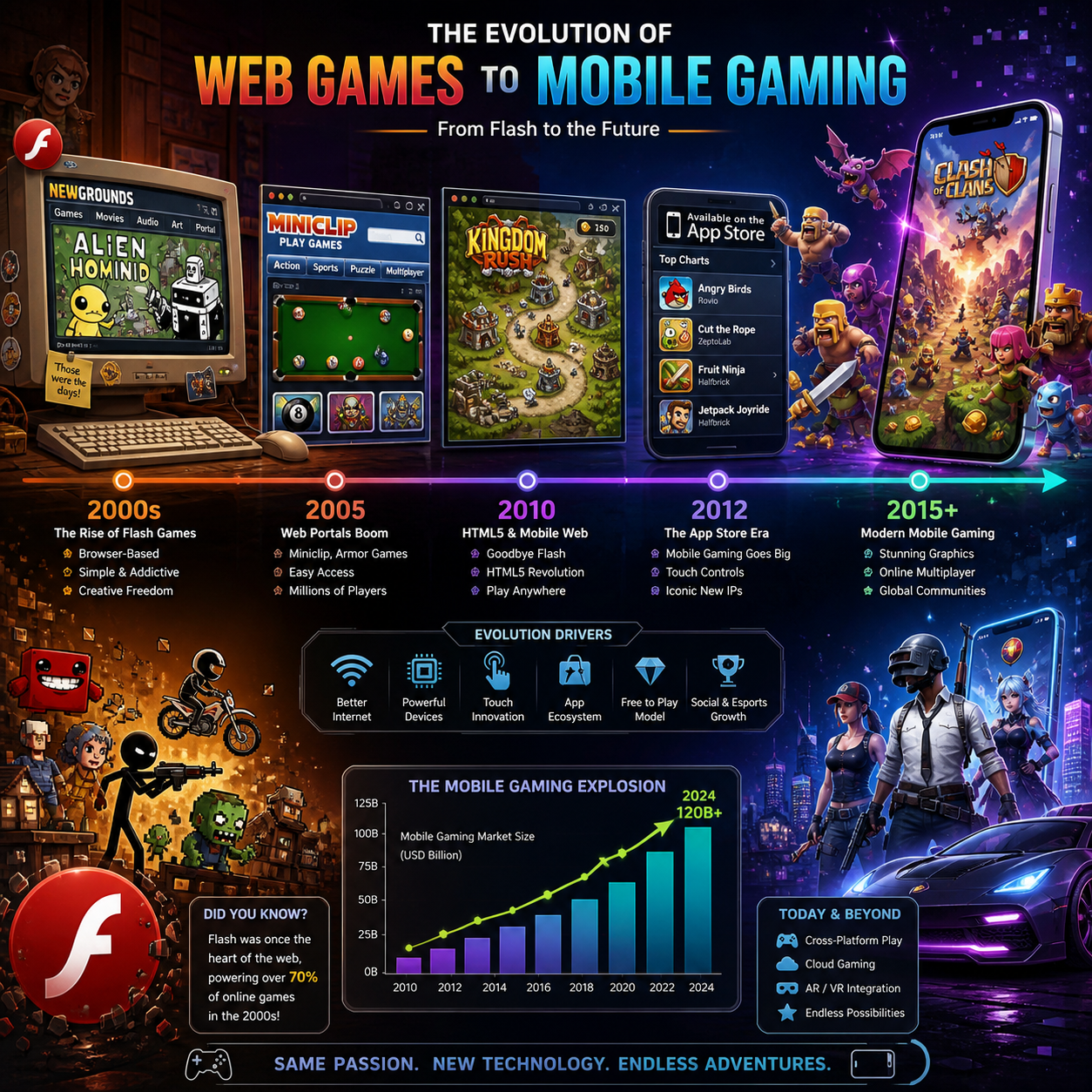
Casual gaming has always been about one thing: making play available to everyone. From the first browser-based games loading in Internet Explorer to match-3 puzzles on a morning commute, the story of casual games is really the story of lowering barriers. Every major platform shift — Flash, HTML5, mobile — moved the same direction, just faster and further.
What Defined the Flash Era of Casual Gaming
The Flash era gave casual gaming its first true mass-market moment, turning ordinary web browsers into gaming platforms that anyone with an internet connection could access. Between the late 1990s and mid-2000s, Adobe Flash Player became the engine behind a generation of browser-based games that needed no downloads, no installations, and no gaming expertise.
Sites like Miniclip, Newgrounds, and Kongregate became household names among a generation of players who had never considered themselves "gamers." The games were simple by design — point-and-click adventures, basic puzzle mechanics, early tower defense formats — but that simplicity was the point. You could be a teenager, a parent on a lunch break, or a retiree with a dial-up connection and still play.
Flash also democratized game creation. Independent developers and hobbyists could build and distribute games without a publisher or a retail shelf. This openness created an enormous variety of experiences and, more importantly, kept casual gaming culturally diverse and experimental throughout the era.
The Rise and Fall of Adobe Flash
Flash dominated browser-based entertainment for nearly two decades because it solved a real problem: the web had no native way to deliver rich interactive content. It handled animation, audio, and interactivity in a single plugin that browsers could run consistently across Windows and Mac systems.
The cracks appeared gradually, then all at once. Security vulnerabilities in Flash became a recurring crisis — the plugin required constant patching, and attackers regularly exploited it. Performance was another issue; Flash was notoriously resource-hungry on older hardware.
The fatal blow came from mobile. When Apple launched the iPhone in 2007, Steve Jobs famously refused to support Flash on iOS, citing battery drain and instability. Android eventually followed suit. Overnight, the entire library of browser-based Flash games became invisible to smartphone users — which, by 2010, was an audience too large to ignore.
Adobe officially ended support for Flash Player on December 31, 2020. Browsers blocked it entirely shortly after. The era closed not with a single dramatic event but with a slow, unavoidable obsolescence driven by a world that had moved to mobile-first browsing.
HTML5 and the Browser Gaming Renaissance
HTML5 filled the gap Flash left by building interactive capabilities directly into the web standard itself — no plugin required. Games built with HTML5 run natively in modern browsers on any device, from a desktop to a tablet to a phone.
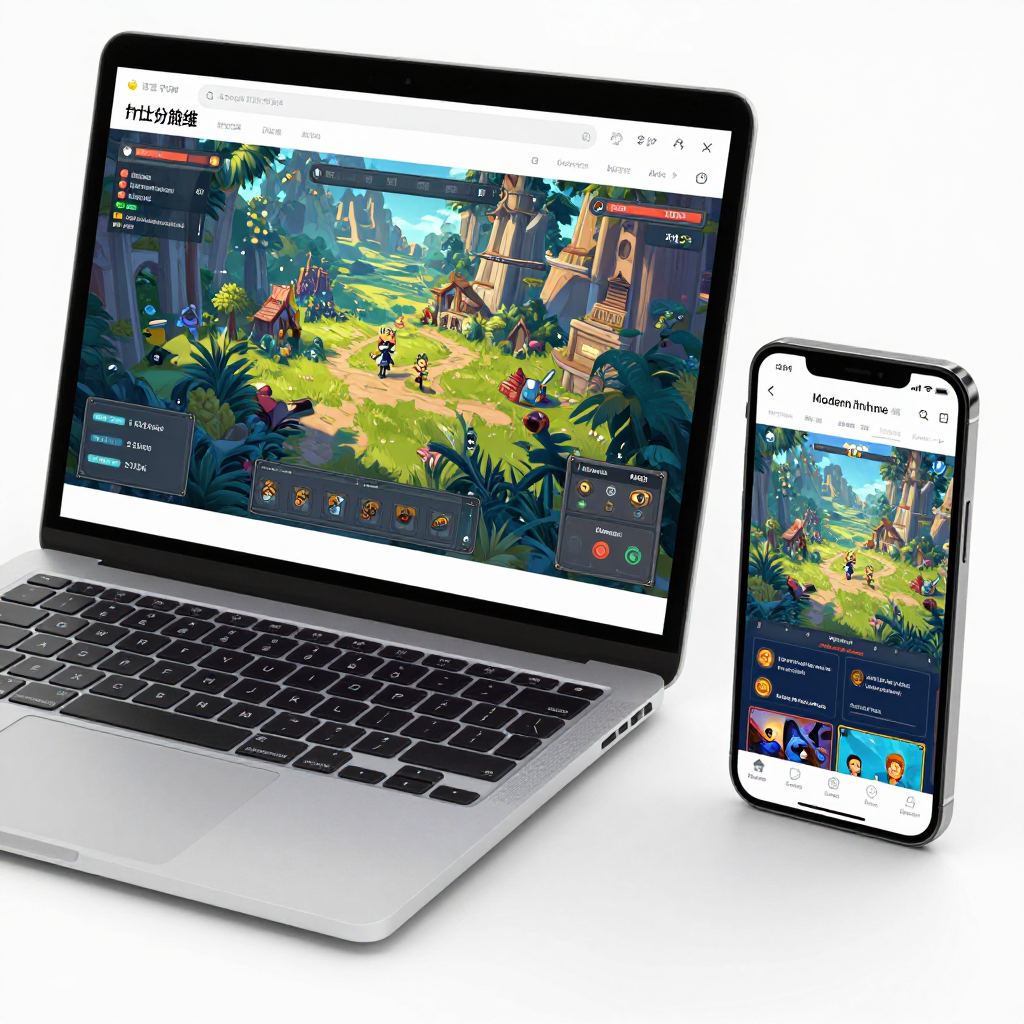
The practical difference for players was immediate. Games loaded faster, worked on mobile browsers, and no longer triggered the dreaded "update your Flash Player" prompt. For developers, HTML5 offered a stable, open foundation that wasn't controlled by a single company and wouldn't be switched off.
The browser gaming renaissance that followed wasn't just technical. It reinvigorated casual game accessibility for players who had drifted away when Flash started breaking on their devices. Lightweight word games, simple strategy titles, and quick puzzle formats found new audiences through HTML5-powered platforms.
Today, HTML5 remains the backbone of web-based casual gaming. It's why you can open a crossword, a solitaire game, or a quick arcade title in a browser tab without installing anything — the same frictionless experience Flash once promised, now actually delivered.
Mobile Platforms Change the Rules
Smartphones and app stores didn't just replace browser games — they redefined what casual gaming could be and who it was for. The launch of the Apple App Store in 2008, followed by Google Play, created distribution channels that put games in the pockets of billions of people who had never owned a gaming device.
The design shift was fundamental. Touch-screen interaction replaced mouse and keyboard, which meant game mechanics had to be rethought from scratch. Tapping, swiping, and pinching became the new grammar of casual play. Games that worked on a 5-inch screen with one thumb while standing on a subway platform were inherently different from games designed for a desk.
App stores also changed discovery. The top charts, user reviews, and algorithmic recommendations of the app store ecosystem created a new kind of viral spread for casual games. Angry Birds, Candy Crush Saga, and Subway Surfers became cultural phenomena partly because the distribution infrastructure made sharing and downloading effortless.
The mobile shift also brought a new player demographic into casual gaming: adults over 35, particularly women, who had largely been absent from traditional gaming markets. The combination of familiar mechanics, short sessions, and social features made mobile casual games genuinely appealing to people who had no interest in console gaming.
The Evolution of Casual Game Design and Monetization
Casual game mechanics and business models evolved together, each shaping the other as platforms changed. The Flash era ran mostly on advertising revenue and premium downloads. Mobile changed that equation entirely.
Three mechanical formats came to define modern casual gaming:
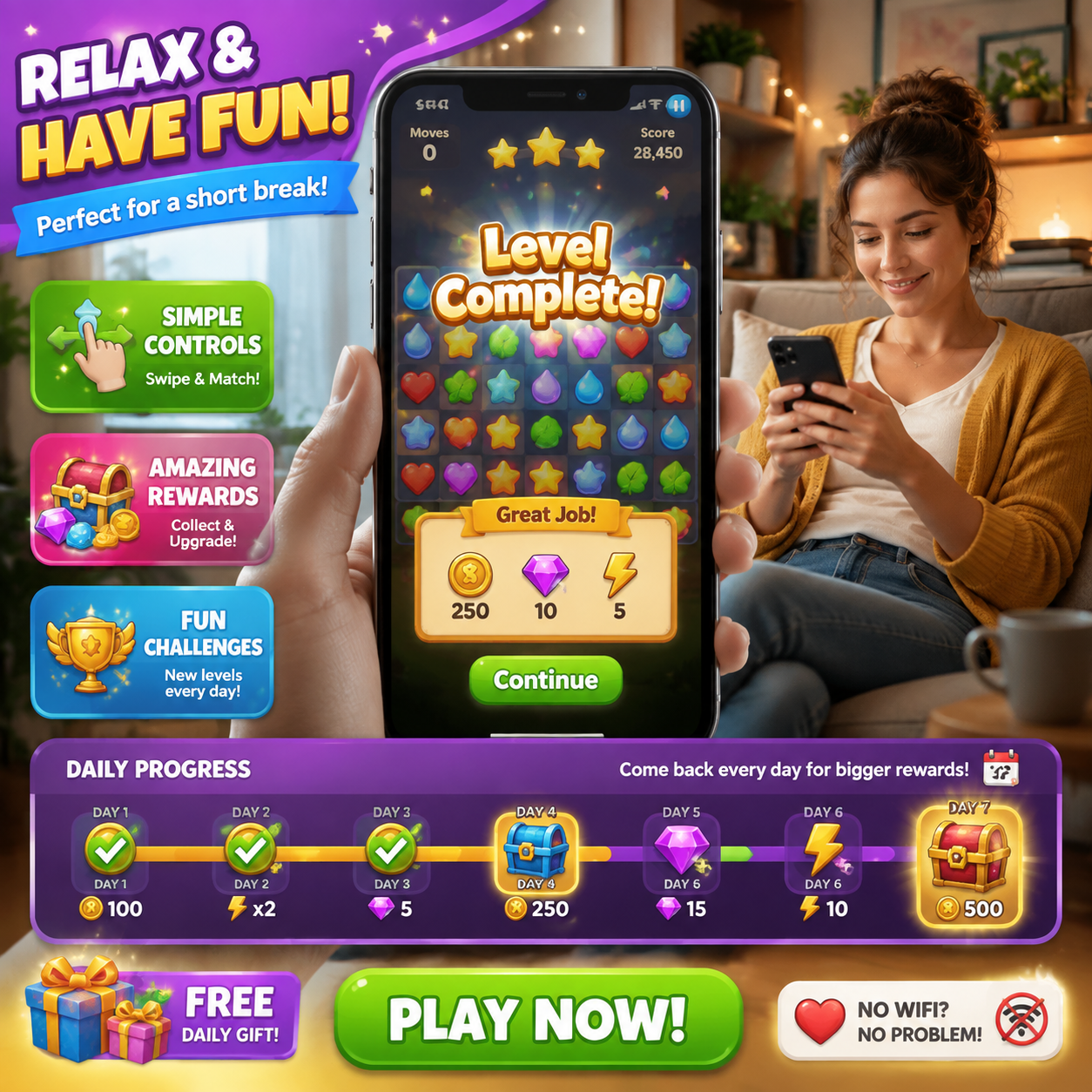
- Match-3 games (like Candy Crush Saga) built on simple, satisfying pattern recognition with near-infinite level progression
- Idle games rewarded players for returning repeatedly, creating habit loops that kept engagement high without demanding active play
- Hyper-casual games stripped mechanics to a single gesture or rule, prioritizing instant accessibility over depth
The freemium model emerged as the dominant business structure: free to download, monetized through in-app purchases, cosmetic upgrades, and rewarded advertising. This model lowered the barrier to entry for players while creating revenue streams that could scale with an engaged audience.
The trade-off is real and worth naming. Freemium mechanics sometimes create friction — artificial wait timers, energy systems, paywalled progression — that can frustrate players. The best casual games balance monetization with genuine fun; the worst use it as a substitute for good design. Players have become increasingly savvy at recognizing the difference.
Accessibility, Social Features, and the Modern Casual Player
Modern casual games reach their audiences by being genuinely easy to start, socially connected, and available wherever players happen to be. These aren't accidental features — they're the result of deliberate design choices that reflect who casual players actually are.
Short session design is central to this. A casual game that demands 45-minute play sessions isn't really casual anymore. The best titles are built around 3–10 minute interactions that feel complete in themselves, which is why they fit so naturally into commutes, waiting rooms, and lunch breaks.
Social integration added a layer that Flash games rarely had. Leaderboards, cooperative challenges, and the ability to share progress on social platforms turned individual play into a shared experience. This social dimension has been particularly effective at retaining players long-term, since competition and community create reasons to return beyond the game mechanics alone.
Cross-platform play has become an increasingly important feature. Players expect to start a game on their phone and continue on a tablet or browser without losing progress. Cloud saves and synchronized accounts have made this possible, and games that offer it see measurably stronger retention than those that don't.
What's Next: Trends Shaping the Future of Casual Gaming
The next chapter of casual gaming is being written by several converging technologies, each pushing further in the direction the medium has always traveled: more accessible, more personalized, more connected.
Cloud gaming removes the last remaining hardware barrier. Services that stream games directly to any screen mean that even graphically richer casual experiences don't require a capable device — just a stable connection. This could bring casual gaming to demographics and regions that smartphone hardware costs have kept out.
AI-driven personalization is changing how games adapt to individual players. Difficulty curves, content recommendations, and even narrative branches can now respond to how a specific person plays, creating experiences that feel tailored rather than generic. For casual games, where player retention is everything, this kind of personalization has obvious value.
The cross-platform ecosystem is maturing. The boundary between browser games, mobile apps, and lightweight PC titles is blurring as HTML5, progressive web apps, and cloud infrastructure converge. A player shouldn't need to think about which platform they're on — the game should just be there.
Through every shift, the core appeal of casual gaming hasn't changed: quick to start, easy to understand, hard to put down. The platforms have transformed completely since the Flash era, but that promise remains exactly the same.
Frequently Asked Questions
What happened to Flash games after Adobe Flash was discontinued?
Most Flash games became unplayable in standard browsers after Adobe ended support in December 2020. However, preservation projects like Flashpoint have archived tens of thousands of Flash games, and some developers ported popular titles to HTML5. A portion of the Flash game library lives on through these efforts, though the era of Flash as a living platform is definitively over.
What is the difference between hyper-casual and casual games?
Casual games typically have moderate depth — multiple mechanics, progression systems, and sessions of 5–15 minutes. Hyper-casual games reduce everything to a single mechanic or gesture, prioritizing instant play with near-zero learning curve. Hyper-casual titles are designed to be picked up and understood in seconds, often at the cost of long-term depth.
Can you still play browser-based casual games today?
Yes. HTML5 has replaced Flash as the technology behind browser-based games, and there are thousands of casual games playable directly in a modern browser without any downloads or plugins. Many dedicated gaming sites and portals continue to offer extensive libraries of browser-accessible casual titles.
Why did mobile platforms replace browser games as the dominant format?
Mobile won because it met players where they already were. Smartphones became the primary computing device for billions of people, and app stores made game distribution frictionless. The combination of always-available hardware, touch-first design, and social sharing features created conditions that browser games couldn't match.
Are casual games considered "real" games by the gaming community?
Definitions of "real" games have shifted considerably. Casual games represent the largest segment of the global gaming market by player count, and their design complexity has grown substantially. The distinction between casual and "core" gaming is increasingly a matter of audience and session length rather than legitimacy. Most players and industry observers no longer treat casual games as a lesser category.